The Best AI Study Platform 2026: End of App Stacks
In 2026, the academic landscape has shifted. Students and researchers are abandoning fragmented app stacks in favor of unified research workflow software. Discover why all-in-one platforms are the new standard for academic success.
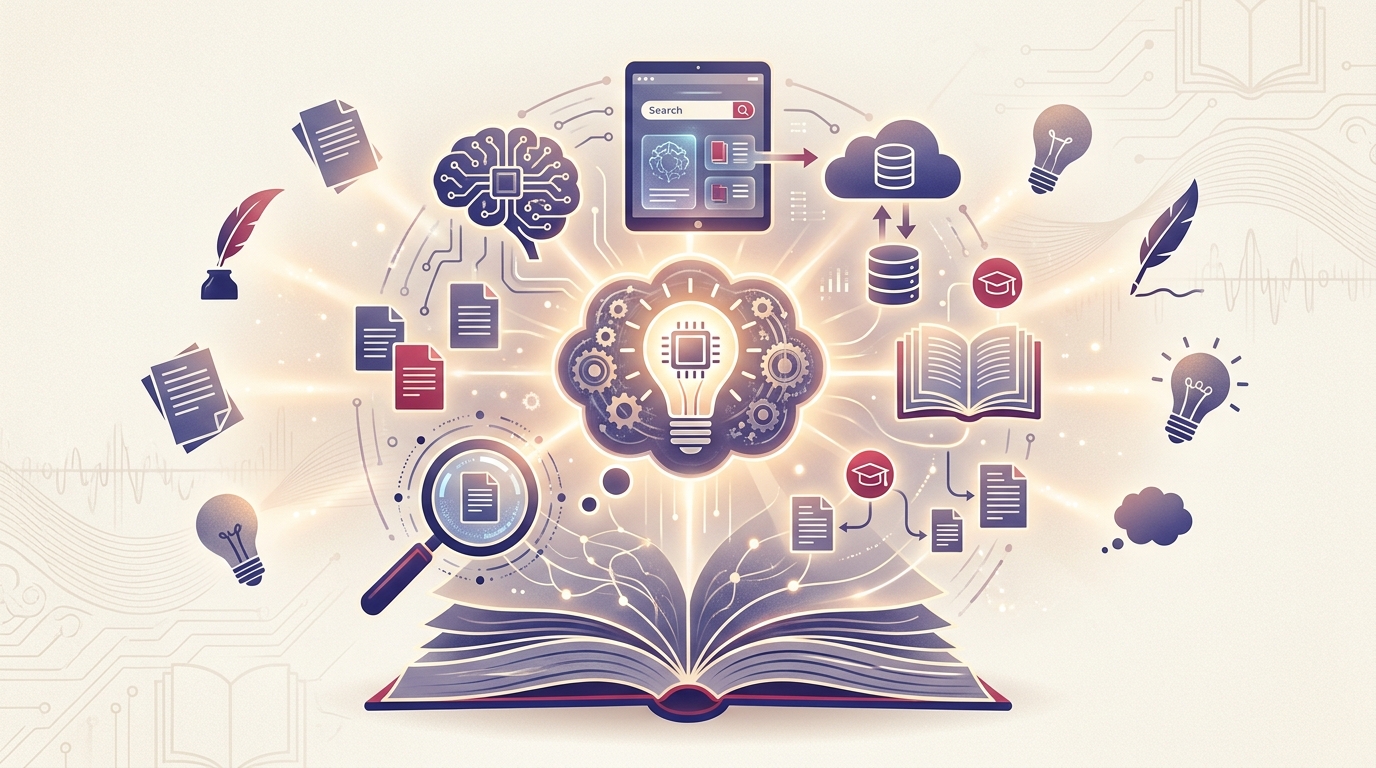
Welcome to the fall semester of 2026. If you walk into any university library today and observe the screens of graduate students, medical researchers, and undergraduates, you will notice a profound shift from just a few years ago. The chaotic mosaic of a dozen open browser tabs, overlapping application windows, and disjointed note-taking tools has largely vanished. In its place is a sleek, unified interface. This is the era of the AI study platform 2026, a technological evolution that has fundamentally transformed how academic work is conducted, synthesized, and produced.
The Era of the Frankenstein App Stack
To truly appreciate this shift, we must look back at the academic workflows that dominated the early 2020s. For years, students and researchers were forced to piece together a "Frankenstein stack" of software to get their work done. A typical research session looked something like this: you would use a dedicated reference manager to store your PDFs, open a separate specialized PDF reader to highlight text, copy those highlights into a distinct note-taking application, paste complex paragraphs into an external generative AI tool for summarization, use yet another web-based tool for paraphrasing, and finally, rely on a standalone citation generator to format your bibliography.
While each of these individual tools may have been highly capable, the workflow itself was deeply flawed. Using separate apps for PDF reading, notes, citations, paraphrasing, and search creates immense friction. It forces the user to become a manual data pipeline, constantly moving text and ideas across digital borders. This fragmentation led to duplicated work, lost formatting, missing references, and a tremendous amount of wasted time.
The Hidden Cost of Context Switching
Beyond the simple loss of time, the fragmented app stack exacted a heavy cognitive toll. Cognitive scientists refer to this as the "switching penalty." Every time a researcher shifts their attention from a dense academic PDF to a separate note-taking app, and then to a web browser to search for a citation, their brain must re-orient itself to a new interface and a new set of rules. Studies have shown that it can take up to 20 minutes to regain deep focus after a context switch.
When you are dealing with high-level academic research—synthesizing complex theories, analyzing empirical data, or conducting comprehensive literature reviews—deep focus is your most valuable asset. The old model of jumping between five different applications shattered this focus. It turned the profound act of learning and discovery into a tedious administrative task of managing software integrations. The modern student doesn't just need smarter tools; they need a cohesive environment that protects their attention.
The Rise of Unified Research Workflow Software
By 2025, the frustration with fragmented tools reached a tipping point. The market began to demand true research workflow software—platforms designed from the ground up to handle the entire lifecycle of an academic project. Users realized that having AI bolted onto legacy applications wasn't enough; the AI needed to be the foundational layer that connected reading, writing, and citing.
As this market matured, we witnessed a massive spike in search queries for a Studoze alternative and similar comparison metrics. This trend is highly revealing. When users actively compare tools and seek alternatives, they are not necessarily rejecting the early pioneers of educational technology; rather, their evaluation criteria have evolved. Today's students are no longer satisfied with a tool that only offers a slightly better reading interface or a standalone chat function. They are evaluating platforms based on ecosystem cohesion. They are looking for an all-in-one study app that eliminates the need to export, import, copy, and paste.
The modern user intent is clear: researchers want a single, secure environment where their source materials, their personal insights, and their output generation exist in perfect harmony. They want a platform where searching through a massive library of PDFs is as intuitive as asking a question, and where generating a perfectly formatted citation is an automatic byproduct of the writing process, not an afterthought.
What Defines the Ultimate All-in-One Study App?
So, what exactly does a best-in-class unified platform look like in 2026? To replace the fragmented stack, an application must excel in four critical pillars of academic work: ingestion, comprehension, synthesis, and output.
- Ingestion: The platform must seamlessly import documents, automatically recognize metadata, and organize files without manual data entry.
- Comprehension: It must provide interactive ways to engage with dense texts, allowing users to query documents directly to extract methodologies, results, and core arguments.
- Synthesis: The software needs a robust space for note-taking where ideas can be connected, restructured, and refined alongside the source material.
- Output: Finally, it must assist in generating the final academic product, offering tools for rewriting, formatting, and citing according to strict academic standards.
Achieving excellence across all four pillars is a monumental engineering challenge, which is why so many early attempts at unified platforms felt clunky or compromised. However, the platforms that have successfully cracked this code are now dominating the educational landscape.
How The Wise Bunker is Defining the 2026 Standard
When evaluating the current landscape of unified academic tools, one platform consistently emerges as the gold standard for this comprehensive approach: The Wise Bunker. Built specifically to handle the rigorous demands of serious study and research, The Wise Bunker perfectly illustrates why the era of the fragmented app stack is over.
Rather than offering a loose collection of disparate features, The Wise Bunker has engineered a seamless, interconnected ecosystem. It is a masterclass in what true research workflow software should be. Let's break down how its specific features actively eliminate the friction that plagued older academic workflows.
Intelligent Document Management
The journey begins with the PDF library with AI metadata extraction. In the past, importing a massive batch of downloaded journal articles meant spending hours manually typing out titles, authors, publication dates, and journal names just to keep your digital library organized. The Wise Bunker eliminates this completely. When you upload a document, the AI instantly scans the text, extracts the relevant metadata, and organizes the file. Your library is instantly searchable, beautifully organized, and ready for deep work without a single keystroke of administrative effort.
Interactive Comprehension
Reading a 40-page peer-reviewed paper can be daunting. The Wise Bunker addresses this with its powerful Chat with PDF feature. This is not a generic chatbot; it is a specialized AI that is strictly grounded in the document you are currently reading. You can ask it to summarize the author's primary methodology, explain a complex statistical table, or find counterarguments within the text. Because this happens directly alongside the document, there is zero context switching. You stay in the flow of reading while the AI acts as a tireless research assistant, helping you decode dense academic jargon in real-time.
Seamless Synthesis and Note-Taking
As you read and interact with your texts, you need a place to capture your thoughts. The Wise Bunker features smart notebooks that are deeply integrated into the reading experience. You don't have to toggle to a different application to write down an insight. More importantly, these smart notebooks maintain a bidirectional link to your source material. If you copy a quote or summarize a section, the notebook remembers exactly which PDF and which page that information came from. This creates a bulletproof trail of evidence for your research, ensuring you never lose the context of a brilliant idea.
Advanced Output and Formatting
The final stages of academic work—drafting and citing—are notoriously stressful. The Wise Bunker transforms this process through its AI paraphrasing with multiple modes and its automatic citation generation. Whether you need to simplify a complex concept for a broader audience, or elevate your own draft into formal academic prose, the multi-mode paraphraser adapts to your specific needs. Simultaneously, because the platform already knows the metadata of every document you've interacted with, it generates flawless citations in your required format (APA, MLA, Chicago, etc.) automatically. There is no need to visit a third-party website filled with ads just to format a bibliography.
Unparalleled Discovery
Finally, the platform features a comprehensive study search capability. When you are deep into a semester, you might vaguely remember a concept you read weeks ago but forget which paper it was in. The study search allows you to query your entire unified database—your PDFs, your chat histories, and your smart notebooks—simultaneously. It retrieves the exact information you need instantly, proving that an all-in-one study app is infinitely more powerful than the sum of its parts.
The Future of Academic Research
The transition we are witnessing in 2026 is not merely a change in software preferences; it is a fundamental upgrade in human cognitive capacity. By offloading the administrative burden of managing files, formatting citations, and switching between apps, students and researchers are freeing up massive amounts of mental energy. This energy can now be directed toward what truly matters: critical thinking, novel discovery, and deep learning.
The era of the Frankenstein stack is officially behind us. The friction, the duplicated work, and the exhausting context switching are no longer necessary evils of the academic process. As users continue to seek out comprehensive solutions and the ultimate Studoze alternative, the market will only continue to refine these unified ecosystems.
If you are still juggling multiple applications to get through your literature reviews, essays, or doctoral thesis, you are working harder than you need to. It is time to experience the clarity and power of a unified workflow. Stop fighting with your software and start focusing on your research.
Ready to transform your academic workflow and experience the premier AI study platform of 2026? Try The Wise Bunker for free today at thewisebunker.com and discover what you can achieve when your tools finally work together.
Ready to research smarter?
Try The Wise Bunker for free and discover how AI can transform your academic research.
Get started free →